
In the previous articles, we've talked about various aspects of forest tea. Today, let's discuss a question that many tea enthusiasts struggle with: Is forest tea better as new tea or aged tea?
There is no standard answer to this question. But after spending over twenty years in the tea mountains and drinking tea for over twenty years, I have my own insights into "what time leaves in tea." Today, let's chat about it.
First, Let's Talk About New Tea: That Lively Freshness
Freshly made forest tea has its unique charm.
The aroma is the most flamboyant. The aroma of new tea tends to rise—when you open the tea cake, that floral-honey and fruity-woody scent hits your nose directly, quite aggressive. This vibrant aroma is something aged tea doesn't have.
The taste is the most distinct. The flavor of new tea is clear and straightforward—bitter is bitter, astringent is astringent, sweet is sweet, with distinct layers. You can taste the "personality" of the tea in one sip.
The wild mountain essence is the most direct. Freshly made forest tea has the strongest "forest feel." After drinking, there's a surge of energy in your mouth and throat, quite refreshing.
But new tea also has its shortcomings: it's more stimulating. New tea is cool in nature, not very friendly to those with weak stomachs. Additionally, the flavors in new tea sometimes seem "separate"—the aroma is the aroma, the mouthfeel is the mouthfeel, the aftertaste is the aftertaste—they haven't fully integrated yet.
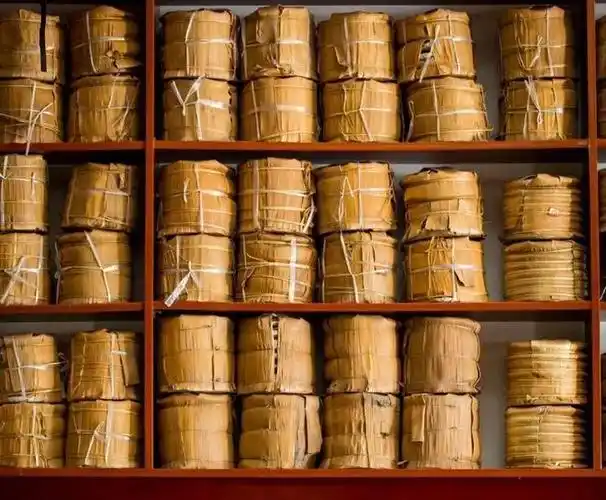
Pu'er Tea Storage
Now, Aged Tea: The Mellow Depth Polished by Time
Forest tea that has been stored for five, ten, or even more years has a completely different character.
The aroma settles down. The aroma of aged tea doesn't rise; it sinks—when you smell it, it's not flamboyant, but that aged, woody, and medicinal scent emanates from the tea liquor. Hold it in your mouth, and the aroma rises from your throat—this is called "water-borne aroma."
The taste becomes rounded. The "edges" of new tea are gradually smoothed by time. Bitterness and astringency fade, and the tea liquor becomes mellow, smooth, and soft, with all flavors blending into one—a feeling of "harmony."
The body sensation becomes gentle. Aged tea turns warm in nature; after drinking, your stomach feels warm and not irritated. Many seasoned tea drinkers prefer aged tea precisely for this warmth and smoothness.
But aged tea also has risks: improper storage ruins it. If it gets damp or absorbs odors, even the best tea becomes garbage. Moreover, truly good aged tea is expensive, and there are many counterfeit "aged" teas on the market; those who don't know their stuff can easily fall into traps.
New Tea or Aged Tea: How to Choose?
My advice to you is: Don't overthink, don't blindly follow trends—choose based on your own needs.
| Situation | Suggestion |
|---|---|
| You want to experience the original flavor of the mountain and the wildness of the forest | Buy new tea and drink it fresh |
| Your stomach is cold-natured and you prefer something milder | Buy tea that has been stored for over five years |
| You want to experience the joy of storing tea yourself | Buy new tea and store it yourself |
| You want to directly enjoy the aged charm | Buy aged tea from reliable sources |
| You have a limited budget | New tea offers better value for money |
| You want to give a gift | Aged tea with years of history shows more thoughtfulness |
Lao Sen's Own Habit
To be honest, I drink both new and aged tea.
In spring, when new tea arrives, I must drink it. That liveliness is like eating fruit freshly picked from the tree—you can't get that flavor in other seasons.
By autumn and winter, when the weather turns cool, I like to pull out aged tea that has been stored for seven or eight years. After dinner, I boil a pot of water and slowly brew and sip it; one infusion can last from 7 PM to 10 PM. That warmth and composure are something young tea can't give you.
New tea is vitality; aged tea is sedimentation. At different ages and with different moods, people prefer different teas. There's no contradiction.
A Heartfelt Word to You
Nowadays, some people in the market hype up "aged tea" as if the older the tea, the better and more valuable it is. That's nonsense.
Garbage tea remains garbage even after a hundred years. Only forest tea of good quality can become a good aged tea through time. If the raw material is poor or the processing is wrong, storing it longer is futile.
So my advice is: First understand new tea thoroughly, then gradually get to know aged tea. Only when you know what good new forest tea tastes like can you judge whether an aged tea is genuinely good or fake.
Don't be led by the concept of "age." The ultimate criterion for tea is always your palate, not the numbers on the packaging.

Paragraph comments 0 · moderated
Comments 0 · moderated