
Earlier, we talked about what forest tea is, how to recognize it, its benefits, how it's made, how to store it, market conditions, and its effects on health. Today, let's get practical: once you buy forest tea, how exactly do you brew it?
I've seen many tea enthusiasts spend a fortune on good tea, only to end up with a bitter, astringent brew, or one as bland as plain water—wasting good stuff. It's not that the tea is bad; it's that the brewing method is wrong.
Today, Laosen will break down the ins and outs of brewing forest tea for you.
First, the Teaware: Matching the Pot to the Tea Matters
Choosing the right teaware for brewing forest tea can make a big difference.
Purple clay pot. This is my most-used tool. Purple clay pots have good breathability, can absorb off-flavors and stimulate the tea's aroma, resulting in a more mellow brew. Especially for aged forest tea, a purple clay pot is the top choice.
When choosing a purple clay pot, pay attention to two things: the walls shouldn't be too thick, and the spout shouldn't be too long. Thick walls retain heat too well and can easily overcook the tea; a long spout pours slowly, affecting the timing of decanting.
Gaiwan (lidded bowl). If you're new to forest tea or want to carefully appreciate the tea's evolution, a gaiwan is more suitable. A gaiwan doesn't absorb or transfer flavors, preserving the tea's true character.
Remember one standard when choosing a gaiwan: the rim should be wide and the body thin. A wide rim won't burn your fingers, and a thin body dissipates heat quickly. A capacity of 120-150 ml is sufficient; larger ones are harder to control.
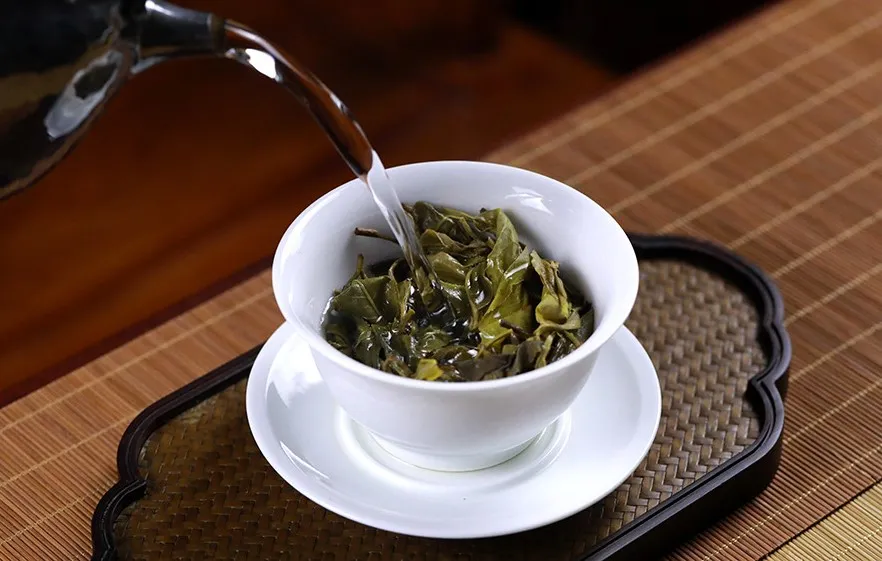
Gaiwan brewing
Don't brew directly in a glass cup. Forest tea needs to be decanted quickly with boiling water; a glass cup can't separate the leaves from the water, and if left too long, it becomes bitter and astringent, ruining good tea.
Next, the Water: Good Water Brings Out Good Tea
It's simple: if you use tap water, you'll taste the tap water; if you use mountain spring water, you'll taste the tea.
If possible, use mountain spring or mineral water. When I taste tea on the mountain, I use local spring water, and the sweetness and body of the brew are noticeably different.
If you don't have it, purified water is fine, but avoid mineral water with too many minerals—excess minerals can suppress the tea's aroma.
The water must be boiling. Forest tea leaves are thick and rich in content; if the water isn't hot enough, the leaves won't open up. Boil the water to 100°C and pour it in vigorously so the leaves can unfurl. I've seen people brew forest tea with 85°C water—that's a pure waste: the aroma doesn't come out, the brew lacks body, and you get nothing.
Key Steps: Essential Brewing Techniques
With teaware and water ready, it's time for the real skills.
Warm the Cups and Utensils
Before brewing, scald the teaware with boiling water. This serves two purposes: sanitizing and raising the pot's temperature—when the pot is hot, the tea leaves can release their aroma better.
Tea Leaf Amount
There's no absolute standard for the amount of tea; it depends on the pot size and personal taste.
I generally use a ratio of 1:20 to 1:25—for a 150 ml pot, I use 6-8 grams of tea. If you prefer stronger, use 8 grams; if milder, use 6 grams.
If you're a beginner and unsure, use a kitchen scale to weigh it; after a few tries, you'll get a feel for it.
Rinsing the Tea
The first infusion of forest tea is not drunk; it's for rinsing. Pour boiling water in and decant quickly—from pouring to decanting, keep it within 10 seconds.
Rinsing serves two purposes: washing away dust on the leaves and awakening the tea—letting the leaves absorb moisture to prepare for subsequent infusions.
The Actual Brewing
After rinsing, start brewing properly.
First few infusions: quick in, quick out. Decant immediately after pouring water; don't steep. Forest tea releases its essence quickly, and over-steeping can bring out bitterness and astringency.
Middle infusions: extend slightly. Around the fifth infusion, the tea's substances are gradually releasing; each infusion can be steeped 3-5 seconds longer than the previous one.
Last few infusions: add more time. Toward the end, when the color fades, you can steep for 20-30 seconds before decanting to extract the last bit of sweetness.
Good forest tea can easily last fifteen infusions or more. The tail water is sweet, light, and has its own charm.
Laosen's Final Words
Brewing tea, in the end, is a skill of feel. No matter how many articles you read or principles you hear, nothing beats brewing it yourself a few times.
When I first started learning to brew, I ruined plenty of good tea. Take it slow, brew more, drink more, and ponder more—you'll naturally find the feel.
Finally, I'll leave you with three sayings:
Good tea isn't afraid of boiling water. True forest tea won't turn astringent when brewed with boiling water; instead, it brings out the aroma and body.
Decant decisively. Don't hesitate; when it's time to decant, do it immediately. Even a second of over-steeping changes the taste.
When you're in a good mood, the tea tastes better. Brew calmly and steadily, and the tea will be smooth and pleasant. If you're flustered, the tea will seem off too.
Once the tea is brewed, sit down and savor it slowly.

Paragraph comments 0 · moderated
Comments 0 · moderated