
In previous articles, we talked about what forest tea is, how to recognize it, how it's made, and what the market is like. Today, let's discuss a topic many people care about: What are the actual health benefits of drinking forest tea?
I'm not a doctor or a nutritionist—just an old tea enthusiast who has been trekking through tea mountains and drinking tea for over twenty years. What I'm sharing today is partly scientifically proven and partly my own real experiences from years of drinking tea. See if it makes sense to you.
First, What Science Says
Forest tea is essentially Pu'er tea, so it has all the health benefits of Pu'er.
Tea polyphenols. These are the most abundant active substances in tea leaves, with antioxidant and free-radical-scavenging properties—in short, they slow down cellular aging. Forest tea trees grow slowly and accumulate more internal substances, so their polyphenol content is often higher than that of regular tea.
Catechins. These are the main components of tea polyphenols, and studies show they have antibacterial, antiviral, and lipid-lowering effects. That's why many people say tea can "cut through grease"—it's not just talk.
Caffeine. It refreshes and energizes you—no need to explain that. But in forest tea, caffeine is bound with polyphenols and releases slowly, so you don't get a sudden jolt like from coffee, nor a sudden crash—it comes on gradually and fades gradually.
Microbial fermentation products. Raw Pu'er tea naturally ferments during storage, producing new active substances. Some studies suggest that certain components in aged Pu'er tea can help regulate gut microbiota.
These aren't things I'm making up; they're supported by literature. But I want to add: Tea is food, not medicine. Don't expect tea to cure diseases. It's a healthy beverage that benefits you in the long run, but it can't replace medication.
Now, My Personal Experience
After years on tea mountains, I've noticed a few distinct feelings when drinking tea:
First, my stomach feels comfortable after drinking.
This is especially important to me. When I was young and living in the city, my diet was irregular, and my stomach was never great. Later, when I went to the tea mountains and drank tea daily, my stomach actually felt better. Especially with aged forest teas, the liquor gives a warm, cozy feeling in the stomach—not irritating, not harsh.
Forest tea grows in an ecologically sound environment with no pesticide residues, so it's clean and pure, adding no extra burden to your body. Anyone who has drunk real forest tea should feel this.
Second, it refreshes without draining you.
I taste many teas every day, from morning to night. If I drink regular tea, by 3 or 4 in the afternoon I feel a bit weak—heart palpitations, no energy. But with forest tea, it's different: my spirits are lifted, but my body doesn't feel depleted.
I think it's because the internal substances in forest tea are well-balanced—caffeine, polyphenols, amino acids, etc., work in harmony rather than a single component acting alone.
Third, that moist, cool sensation in the throat.
Good forest tea leaves a moist, cool feeling in the throat, which I call "throat resonance." It's not sweetness or fragrance, but a sense of clarity—as if your throat has been cleansed, and your voice feels refreshed when you speak.
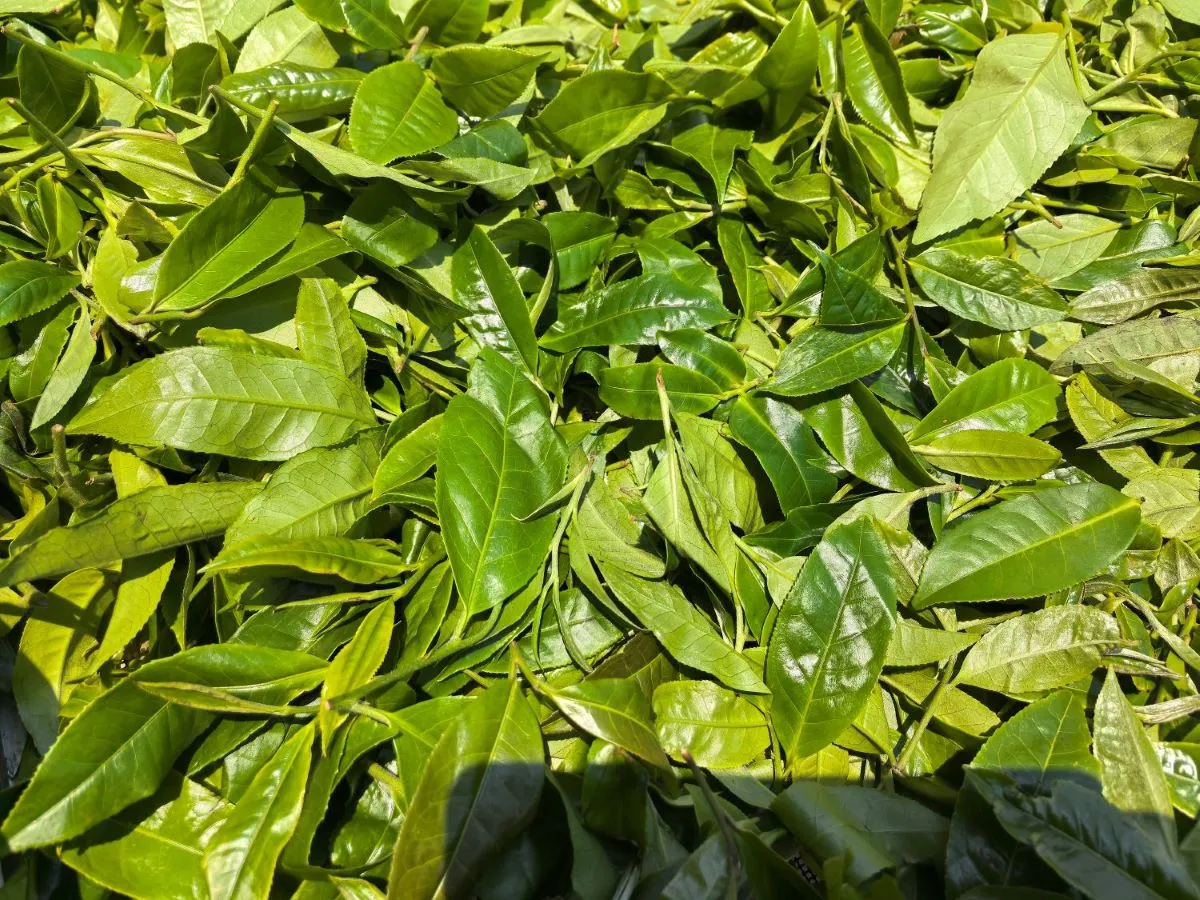
Fresh leaves of forest tea
A Few More Practical Words
I know many people drink tea for health, and that's fine. But I want to tell you: Don't be too utilitarian about tea.
If you expect a cup of tea to lower your blood pressure, help you lose weight, or ward off all diseases, that's unrealistic. Tea is just a beverage—healthier than soda, more flavorful than water, and gentler than coffee.
A truly good tea is one that makes you feel comfortable, relaxed, and happy after drinking it—that's enough. As for all those health claims, take them with a grain of salt.
Laosen's Advice for You
If you want to drink forest tea for health, here are some practical tips:
- Drink clean tea. Avoid teas with excessive pesticide residues, no matter how cheap. The biggest advantage of forest tea is its cleanliness—that's more important than anything.
- Drink the right tea. New tea is more cooling, so people with cold stomachs should drink less. Forest tea aged for three to five years becomes milder and suits most people.
- Don't drink on an empty stomach. Even the best tea can hurt your stomach on an empty stomach. Eat a little something first, then sip slowly.
- Don't overdo it. Three to five infusions a day is enough; drinking too much may keep you awake at night.
Tea is a good thing, but it should be enjoyed properly. If you rush, overindulge, or treat it as medicine, you lose the joy of tea drinking.

Paragraph comments 0 · moderated
Comments 0 · moderated