
In the previous twelve articles, we talked about what forest tea is, how to recognize it, brew it, store it, and whether it's worth it. Today, Laosen wants to talk about something different——not how to drink tea, but how to protect it.
This may sound grand, but once you've spent time on the tea mountains, you'll understand: the root of forest tea lies in the forest. As long as the forest stands, the tea remains; if the forest is gone, everything is in vain.
First, let's talk about reality: the ecological pressure on tea mountains is increasing
After forest tea became popular, more people went into the mountains, and tea farmers' incomes rose—that's a good thing. But there's another side to the coin: ecological pressure has also increased.
I've seen changes in some places with my own eyes. A few years ago, the forests were dense and green, with thick layers of fallen leaves that felt soft underfoot. Two years later, the forests were thinner—not because trees were cut down, but because people came too frequently, compacting the soil, trampling the vegetation, and preventing young trees from growing.
In some places, to make tea picking easier, they cleared all the undergrowth and weeds. It looked clean, but the ecological chain was broken—the humus layer was gone, insects disappeared, and birds stopped coming. Tea trees lost the protection of the forest, and their quality declined year after year.
Laosen will tell you something blunt: In some places, 'forest tea' is narrowing its own future path.
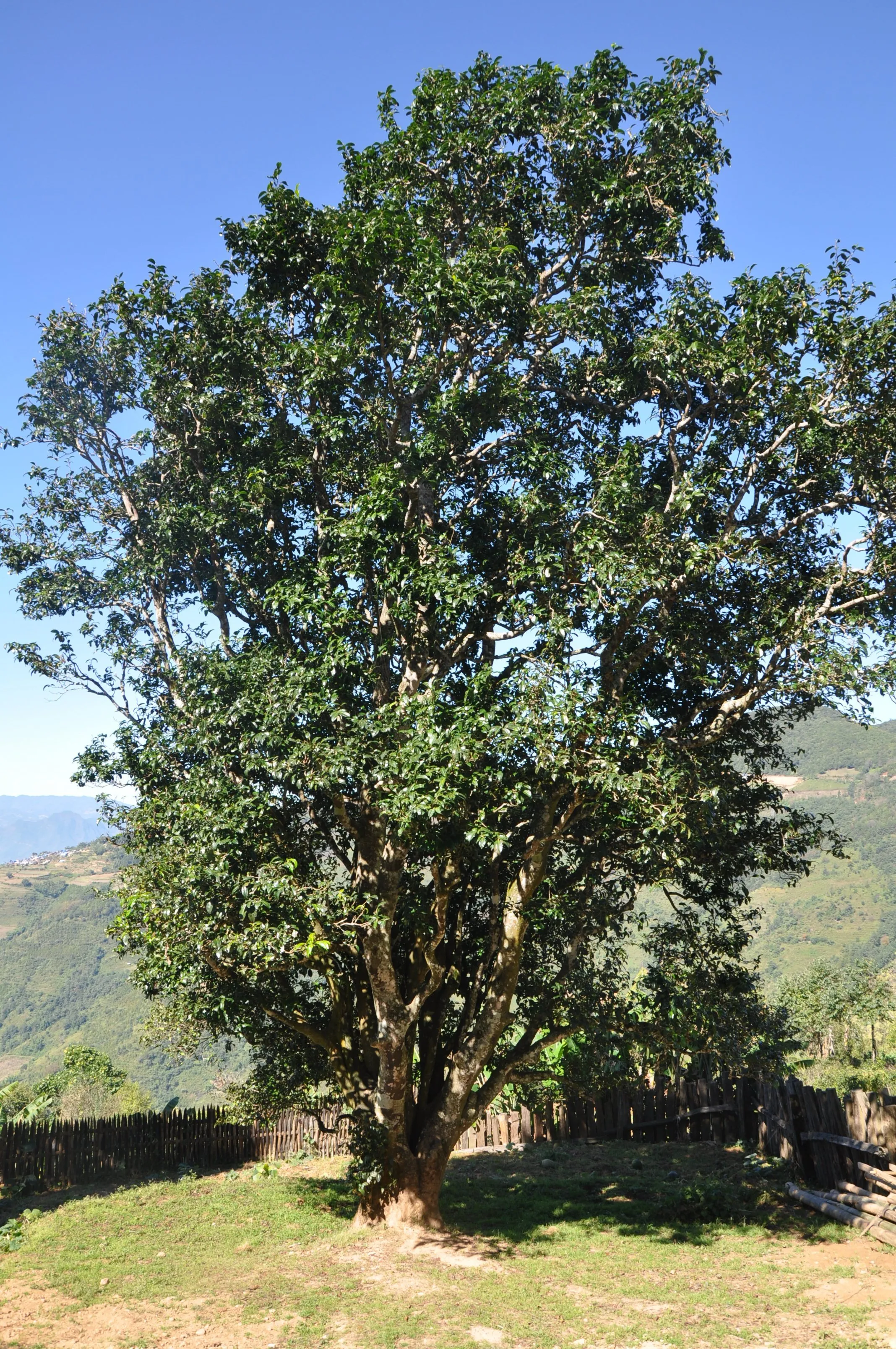
Nothing but tea trees
Let me make it clear: the 'ecology' of forest tea doesn't come out of thin air
Many people think 'forest tea' is just a label stuck on tea trees, which can be put on or taken off at any time. That's an amateur's view.
A true forest ecosystem cannot be built overnight. A pristine forest takes decades or even centuries to grow from a sapling to a towering tree. The symbiotic relationships among soil, microorganisms, and small animals in the forest take even longer to develop.
Tea trees are part of this ecosystem, not the whole. If you only protect the tea trees and not the forest, the tea trees won't thrive. It's like feeding the fish in an aquarium without changing the water—the fish will eventually die because water is their living environment.
Laosen's approach: I can do limited things, but someone has to do them
I don't consider myself noble, but I have my own bottom lines:
First, don't over-harvest. In some places, forest tea is picked until only old leaves remain, and the tea trees are too exhausted to sprout new buds. My principle is: leave the leaves that should be left; don't pick the tea trees to death just to make money.
Second, follow the rules when entering the mountains. In forest tea gardens, don't cut trees, don't make fires, don't litter, and take out everything you bring in. These sound like basic common sense, but fewer people actually do them than you might think.
Third, give the forest enough 'rest' time. The same forest tea garden cannot be picked all year round. After the spring tea harvest, I don't go back in, letting the forest and tea trees catch their breath.
These practices seem simple, but they're not easy to stick to. Especially when tea prices are good, others pick their tea trees three or four times, but I only pick mine once. I earn less money, but the forest and tea trees can live longer.
Now, what consumers can do
Ecological protection isn't just the responsibility of tea makers; tea drinkers can also contribute.
First, don't be greedy for bargains. True forest tea has limited production, so prices won't be low. If you buy 'forest tea' at a very cheap price, it's probably not genuine. The money you save might ultimately destroy the reason for real forest tea to exist.
Second, find reliable channels. Find a tea seller you trust, one who is willing to explain the origin and ecology clearly. Your choices will affect the ecology on the tea mountain—if you're willing to pay for good ecology, tea farmers will be willing to invest in protecting the forest.
Third, don't be superstitious about 'wild'. Some teas labeled 'wild' are actually damaging plants in nature reserves. Remember this: Truly good tea is planted, nurtured, and protected—not 'wild'.
Laosen's heartfelt words to you
I often say to people around me: Every cup of forest tea we drink now comes from the forests left by the previous generation. What should we leave for the next generation?
If we don't pay attention to ecological protection now, in ten or twenty years, the so-called 'forest tea' will be a joke—if the forests are gone, where will forest tea come from?
I'm over fifty now, and I can't say how many more years I can run around the tea mountains. But I hope that when I can't run anymore, those forests will still be there, those tea trees will still be there, and there will be young people willing to take over my work, continuing to guard these forests and make tea.
This matter is more important than how much tea I sell.

Paragraph comments 0 · moderated
Comments 0 · moderated