
First, a simple definition of forest tea
Forest tea, plainly speaking, is tea made from the fresh leaves of tea trees that grow in primeval forests. The tea trees are not neatly planted in open tea gardens but scattered in the woods, shaded by tall trees overhead, accompanied by shrubs, weeds, and moss underfoot, living together with dozens or even hundreds of plant species, insects, birds, and animals. Tea made from the fresh leaves of tea trees growing in such an environment is called forest tea.
In recent years, the term "forest tea" has become increasingly common, and some people make it sound mystical. But first and foremost, it refers to two things: where the tea tree grows and in what kind of environment it grows up. The origin and growing method often determine the first impression this cup of tea leaves on people.
The difference between forest tea and terrace garden tea lies in the roots
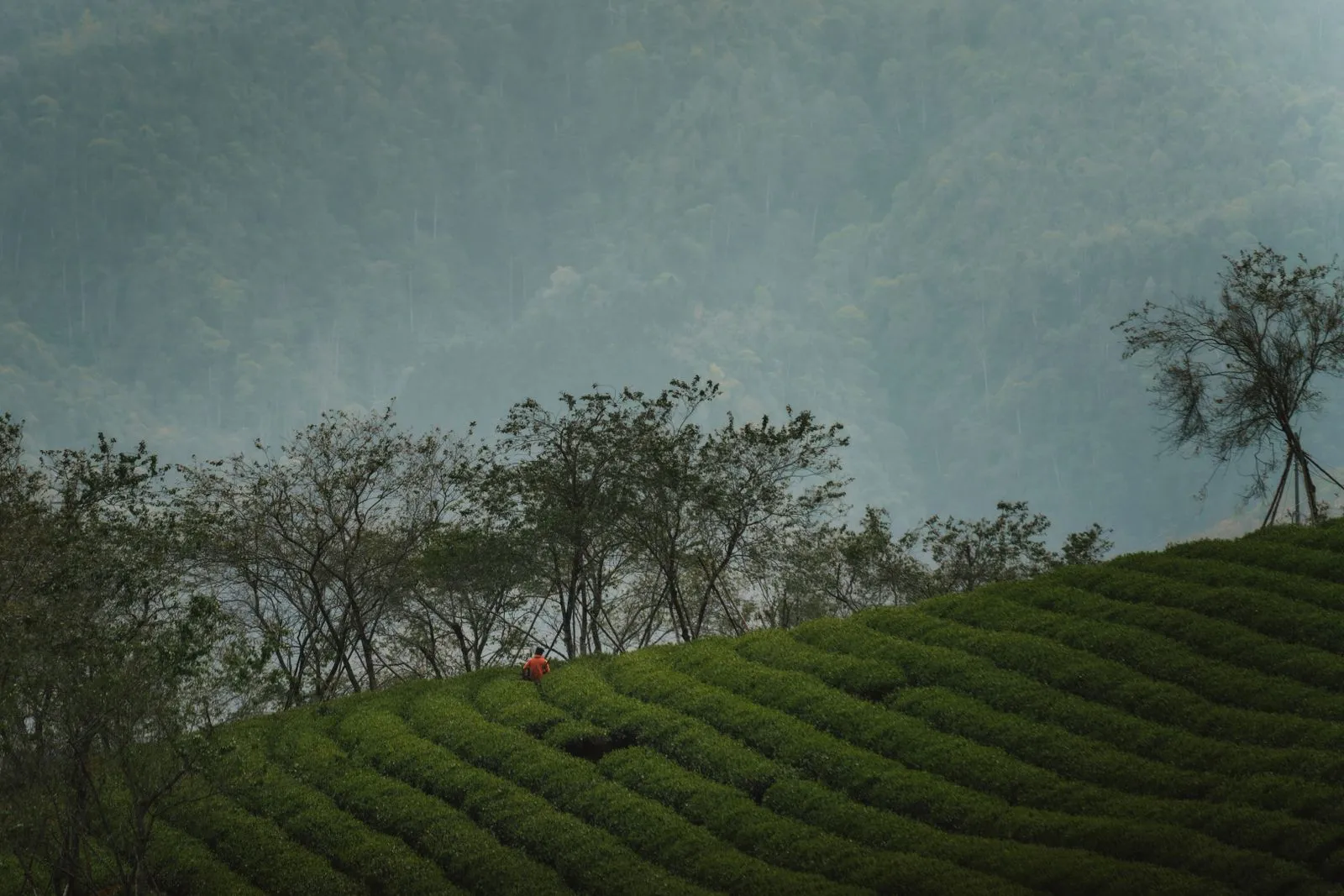
Over the past few decades, the mainstream of tea gardens has been terrace-style: hillsides are cut into terraces, tea trees are densely planted in rows, with fixed routines for watering, fertilizing, pruning, and pest control. Terrace tea gardens have high yields and are easy to manage; most bulk tea on the market today comes from such gardens.
Forest tea takes a different path. Tea trees do not rely on artificial fertilizers to grow; they depend on the fallen leaves and humus layer accumulated over years in the forest. Common pests and diseases are mostly left to birds and insects to resolve. Tea trees grown this way grow slowly and have low yields, with internal substances accumulating slowly in the fresh leaves, resulting in tea with denser and more layered flavors.
This is not to belittle terrace tea. Terrace tea with careful management and proper processing can also produce good quality. The point about forest tea is that the growing environment and flavor logic are indeed different, and when tasting, one should approach them separately.
The word "forest" refers to ecological integrity
People often ask: Does having a few trees next to a tea garden count as forest tea? Can it be called "forest" as long as there is shade?
My view is that in tea, the core of "forest" is not about the number of trees or how impressive the name sounds, but about whether the ecology is intact. True forest tea producing areas have large tracts of native vegetation, a complete food chain, and tea trees are members of the forest, not the protagonists. The indescribable wildness, coolness, and grassy notes in the tea liquor often grow from this year-after-year symbiosis.
Conversely, if you just plant a few rows of tea trees at the edge of a small grove and label it "forest tea," that is mostly borrowing a name. Ecological integrity must be assessed by walking the land and seeing with your eyes; it is not something printed on a package.
Also clarify: forest tea is not the same as wild tea
Some tea enthusiasts confuse forest tea with wild tea. Wild tea usually refers to tea trees that grow without human management, self-sowing and self-dying; they are laborious to harvest and yield even less. The tea trees in forest tea mostly have a history: either planted by tea farmers in the forest in early years and rarely interfered with since, or old tea gardens passed down through generations that have gradually been enveloped by the forest. They all grow in natural environments, but "planted by people, almost unmanaged" and "completely unmanaged" are ultimately two different things. When buying tea, do not be too tantalized by the word "wild"; first ask clearly about the tea tree's background, which is more practical than anything else.
Concluding remarks
Forest tea is not a magical term, nor does it mean the more expensive the better. It is a description of the tea tree's growing environment and an expression of ecological integrity. To truly understand it, one must ultimately return to the tea itself: whether the aroma is clean, whether the liquor is smooth, and whether it feels comfortable to drink.
First understand "what forest tea is," then discuss whether to buy and whether it is worth it; only then will you not go astray.
Things in the forest cannot be rushed. Drink slowly, learn slowly; the mountain will recognize you, and the tea will recognize you.
Related: For more forest tea science, see the YeCha column.
Paragraph comments 0 · moderated
Comments 0 · moderated