
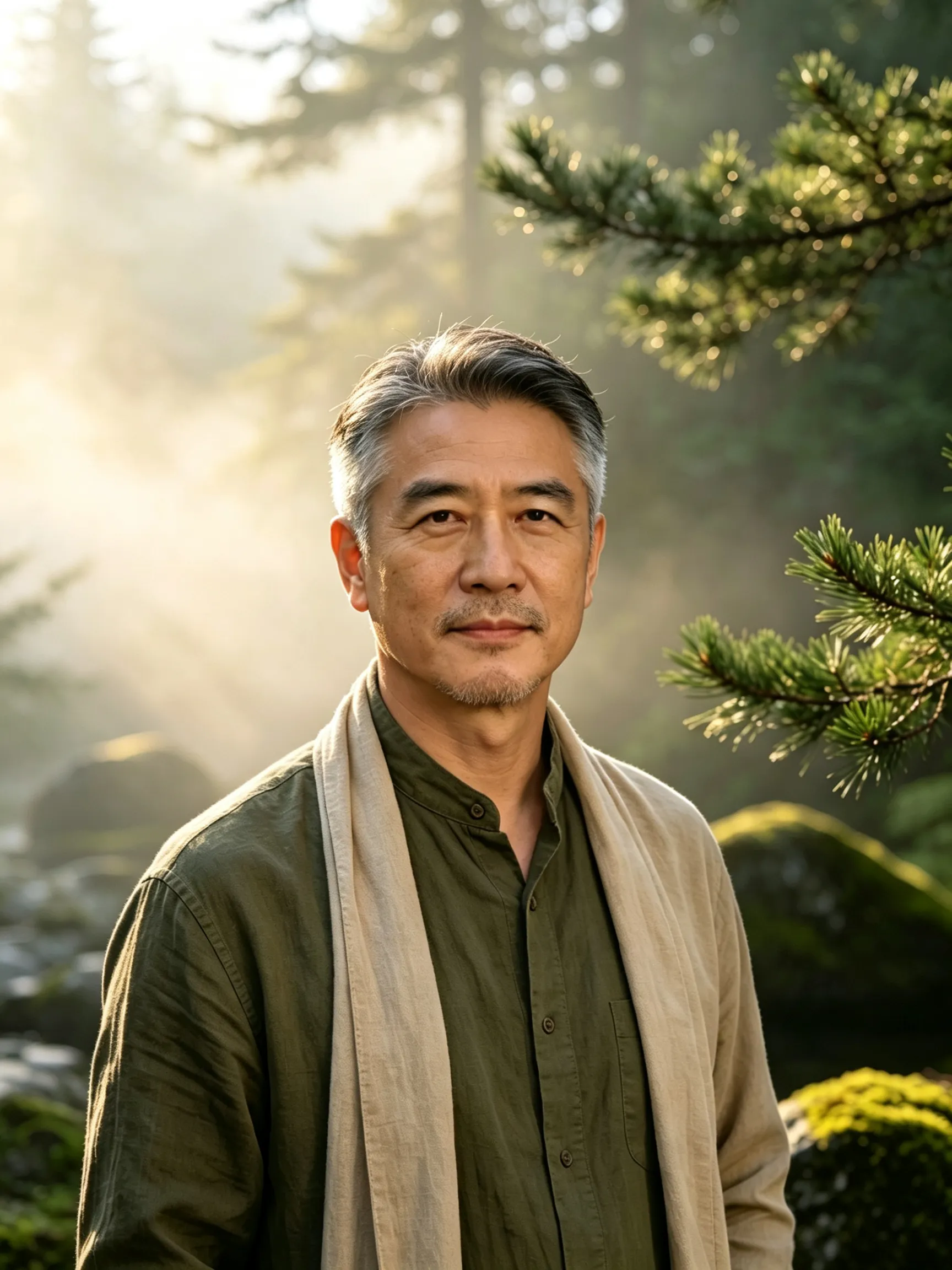
I am Lao Sen.
The name I gave myself. Growing up in the mountains, guarding the tea mountains, spending half my life without leaving the forest, so I simply called myself Lao Sen—easy to remember and fitting. But this name isn't for nothing—after more than twenty years of running around, I have a mental map of the tea mountains in Xishuangbanna, Pu'er, and Lincang: which ravines have a few big tea trees, which roads are impassable by motorcycle on rainy days, and which villages have comfortable fire pits and good drinks.
When I was young, I also went out into the world. I stood behind the counter at a tea shop in the city, watching the boss take terrace tea bought for thirty yuan, wrap it in new cotton paper, and sell it for three thousand, telling customers, "This tea tree is eight hundred years old." The first time I heard it, I believed it. Later, I found that the whole shop was full of tea, not a single cake was genuine. I left in less than three months. When I left, the boss said I didn't know how to "play the game." To hell with "playing the game." I only have one rule when selling tea: What you taste in your mouth is what it is. Don't use stories to spice up the tea.
Later, I returned to the mountains. I fixed up a small house by the village, set up an iron wok, collected fresh leaves from the surrounding forest, and stir-fried and sun-dried them myself. The quantity is not large—just a few hundred kilograms of raw tea a year, enough to get by. The customers are all old tea friends who trust me. I don't talk mystically with them—I tell them truthfully which forest the tea is from, roughly how old the trees are, which year it was made, what it tastes like, and what flaws it has. If they want stories, they can go elsewhere. Here, there's only tea.
Once, a guest from Beijing drank tea with me for three days. Before leaving, he asked, "Lao Sen, you've been on this mountain for twenty years. What are you after?"
I thought for a moment and said, "After peace of mind."
Look at the tea shops, live-streaming rooms, and brand launches down the mountain—they're all putting on a show. Today it's a "Tea King Tree" auction, tomorrow a "Thousand-Year Ancient Tree" debut. The cotton paper is printed with all sorts of fancy designs, but when you open it and drink, it's weak, thin, with a raw, grassy smell from chemical fertilizers. I want to vomit after one sip—not physically, but in my heart. Tea trees don't lie; it's people who lie.
After decades of dealing with the forest, I've come to understand: if you tell the tea tree the truth, it gives you good leaves; if you fool it, it won't be polite either. Why is forest tea good? Because that forest never plays tricks on people—it grows as tall as it should, as slowly as it should. The depth accumulated over a hundred years, you'll understand when you taste it.
Alright, that's it for today. I'm Lao Sen. Let's continue next time.
(Next, we'll thoroughly discuss "what is forest tea." No beating around the bush, no stories, just the real things in the mountains.)
Paragraph comments 0 · moderated
Comments 0 · moderated