
People often ask me: forest tea isn't cheap—what exactly makes it good?
Among those who talk about forest tea in the market, eight out of ten talk about "rarity," "spirit," or "mountain wildness." I don't like to talk that way. Having drunk tea for twenty years, I think its goodness can be pinned down to three concrete dimensions: ecology, craft, and flavor. Once explained clearly, you can judge for yourself whether it's worth it.
Ecological Integrity: First the Forest, Then the Tea
The core of forest tea is not the word "tea," but the word "forest."
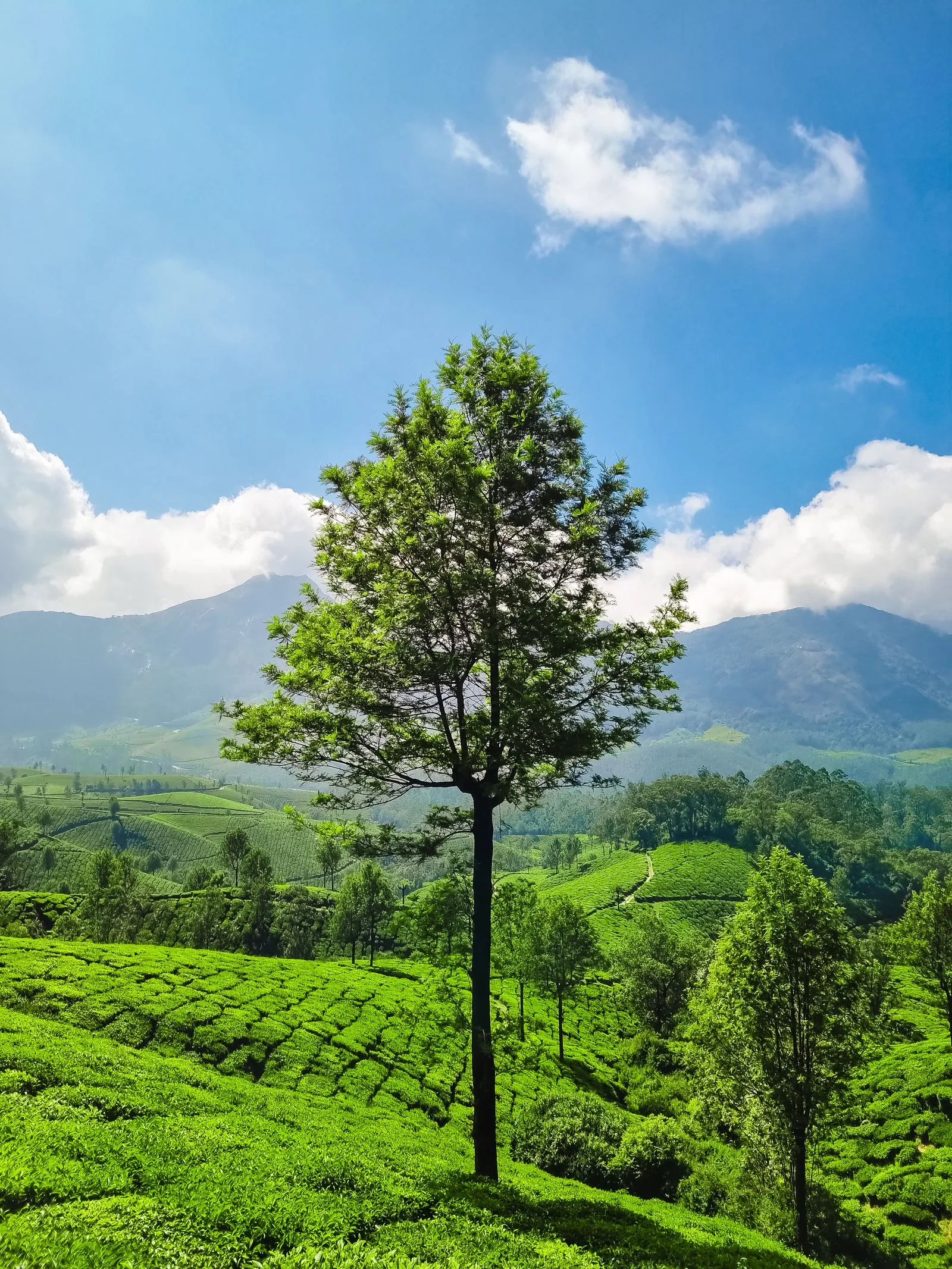
In a complete forest, tea trees are just one member. Tall trees provide shade, fallen leaves and decaying soil return nutrients to the land each year, and insects and birds maintain the balance. Tea trees are not "planted" on a bare slope, but grow in a system that runs on its own—no chemical fertilizers, no pesticides, relying on the ecosystem's own cycle.
The direct consequence of ecological integrity is slowness. Tea trees sprout slowly, grow slowly, and are harvested only one or two seasons a year, yet the internal substances in the leaves accumulate fully and evenly. To use an analogy, it's the difference between open-field vegetables and greenhouse vegetables—tea follows the same principle. Also because of this slowness, forest tea's yield is naturally limited—this is one reason for its higher price, not deliberate hype.
One thing should be made clear here: good ecology does not mean a certain component is exceptionally high, nor does it mean drinking it will do something special. I don't talk about such claims, and I advise you not to easily believe them. The value of ecology lies first in allowing tea trees to live healthily, making the tea clean and enjoyable to drink over time.
Restrained Craft: Not Overdoing It Is Good Craft
No matter how good the fresh leaves, they fear excessive processing. The craft of forest tea centers on one word: "let"—let the tea leaves express their own flavor.
Withering, fixing, rolling, and sun-drying—each step is about subtraction. Withering must be even, so the leaves lose water uniformly; fixing must be thorough but not excessive, with the measure relying on hand feel and experience; rolling must form strips without crushing, leaving a path for the liquor; sun-drying must dry without scorching, letting sunlight carry away the last moisture. No added fragrance, no added flavor, no forced ripening, and certainly no high-temperature tricks to make the tea "fake old."
I've seen many who treat craft as a performance, and those who, to cater to the market, push forest tea toward new techniques and heavy flavors. I won't judge right or wrong, but I want to remind you: the heavier the hand in craft, the further it strays from the forest's original taste. Truly good craft is quiet—every sip you drink is still what that forest originally is.
Flavor Layers: From the First Infusion to the Last
Ecology and craft land in the cup as flavor. The layers of forest tea must be experienced over the full time of a brew:
In the early infusions, the aroma is not sharp or floating; it clings to the liquor, and the fragrance in the empty cup is clean—whether floral or honeyed, it's clear, not muddled. In the middle infusions, the liquor has body and thickness; bitterness resolves, astringency recedes, the texture is fine, and it goes down smoothly. The tail is where the true character shows—good tea ends with clean sweetness and can still be steeped several more times; the leaves fully open, showing it still has strength.
Stamina is not exclusive to forest tea, but it is its common trait. Behind it is substance supporting it—you can't fake it, and you can't rush it.
In One Sentence: Good Tasting, and It Stands Up to Drinking
Having explained the three dimensions, my conclusion is simple. The goodness of forest tea is, first, that it tastes good—pleasant in the moment, not thin or cloying; second, that it stands up to drinking—you won't tire of it daily, and if you store it for a few years and open it again, the flavor can still improve. This may sound plain, but after twenty years of drinking tea, it's my most honest experience.
As for health and wellness claims, I don't talk about them. Tea is tea, not medicine. Whether forest tea is worth it, judge by your own taste and budget; if you want to try, buy a little first and compare, and understand what you drink—that's more important than anything.
Paragraph comments 0 · moderated
Comments 0 · moderated